

Basic Structure Of Solid State Disk
Aug 21, 2022
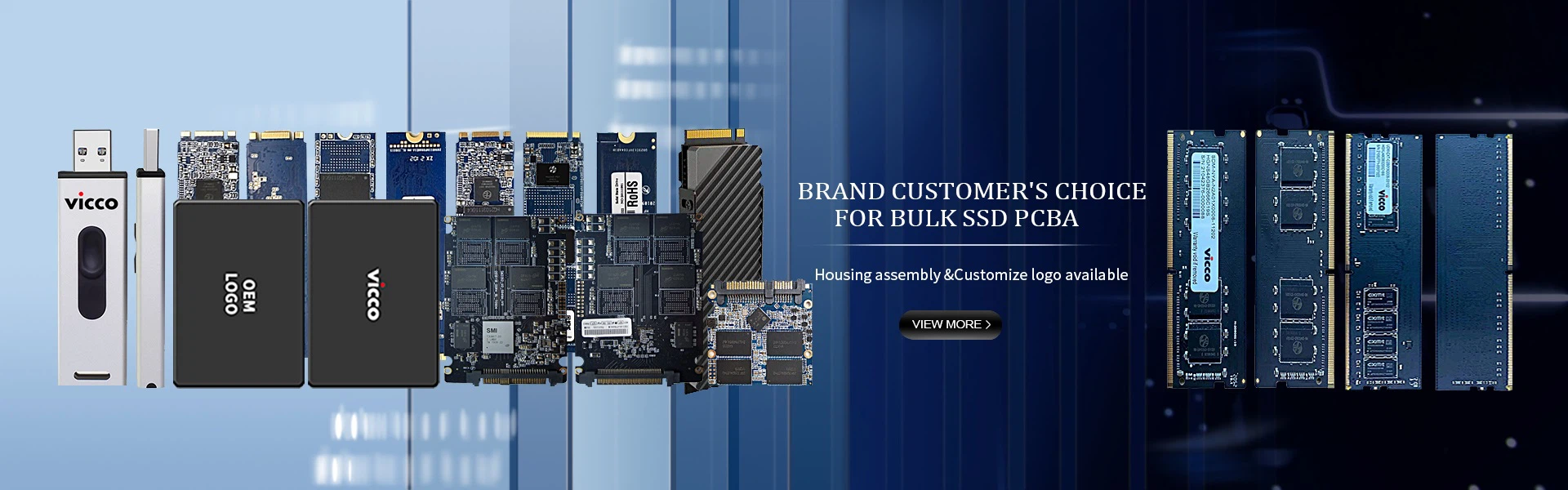
Solid state disk based on flash memory is the main category of solid-state disk. Its internal structure is very simple. The main body of solid-state disk is actually a PCB. The most basic accessories on this PCB are control chip, cache chip (some low-end hard disks do not have cache chip) and flash chip for storing data.
Main control chip
The more common solid-state drives on the market include lsisandforce, indilinx, jmicron, Marvell, Phison, SanDisk, goldendisk, Samsung and Intel. The main control chip is the brain of the solid-state disk. Its role is to reasonably allocate the load of data on each flash chip, and to undertake the whole data transfer, connecting the flash chip and the external SATA interface. There is a great difference between the capabilities of different masters. There will be great differences in data processing capabilities, algorithms, and control of reading and writing flash memory chips, which will directly lead to the performance gap of solid-state disk products up to several times.
Cache particles
Next to the main control chip is the cache particle. Like traditional hard disks, solid-state drives need high-speed cache chips to assist the main control chip in data processing. What needs to be noted here is that some cheap solid-state disk schemes omit this cache chip in order to save costs, which will have a certain impact on the performance during use, especially on the reading and writing performance and service life of small files.


